Customer Experience
A Practical Framework for Adopting a Customer Experience Strategy
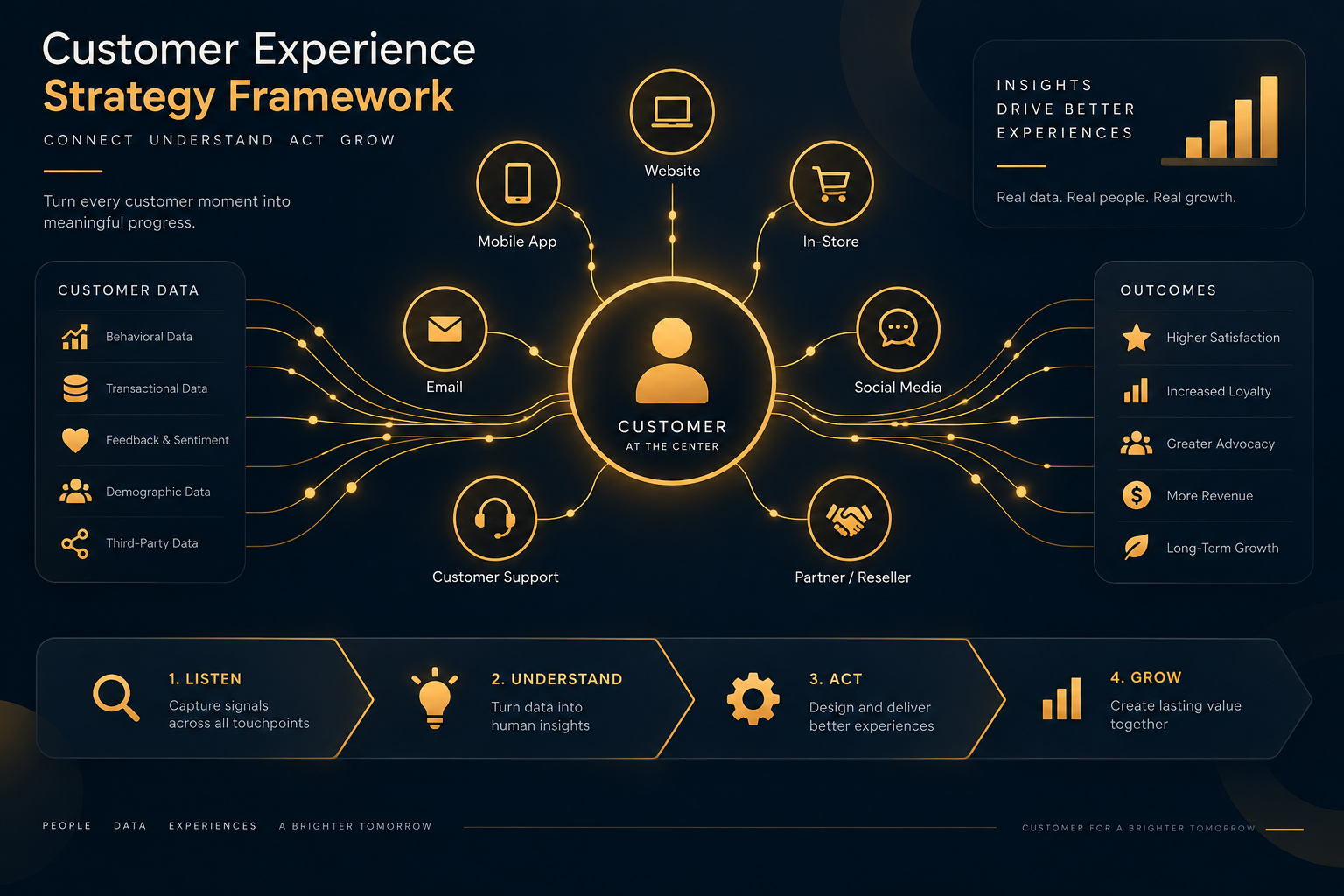
Customer experience (CX) is no longer a buzzword but a critical factor that defines whether businesses thrive or struggle. Yet many companies struggle to translate lofty CX goals into actionable, measurable strategies. This post lays out a practical framework for adopting a customer experience strategy that delivers real value — from understanding customer needs to continuous improvement.
1. Define Clear CX Objectives Aligned with Business Goals
Start by identifying what you want your CX strategy to achieve. Are you aiming to increase customer retention, reduce churn, boost upsell opportunities, or improve customer satisfaction scores? Your CX objectives must directly support your overarching business goals.
For example, a SaaS company might set an objective to reduce churn by 10% within 12 months through enhanced support responsiveness and proactive communication. Without clear objectives, efforts often become scattered and ineffective.
2. Map the Entire Customer Journey
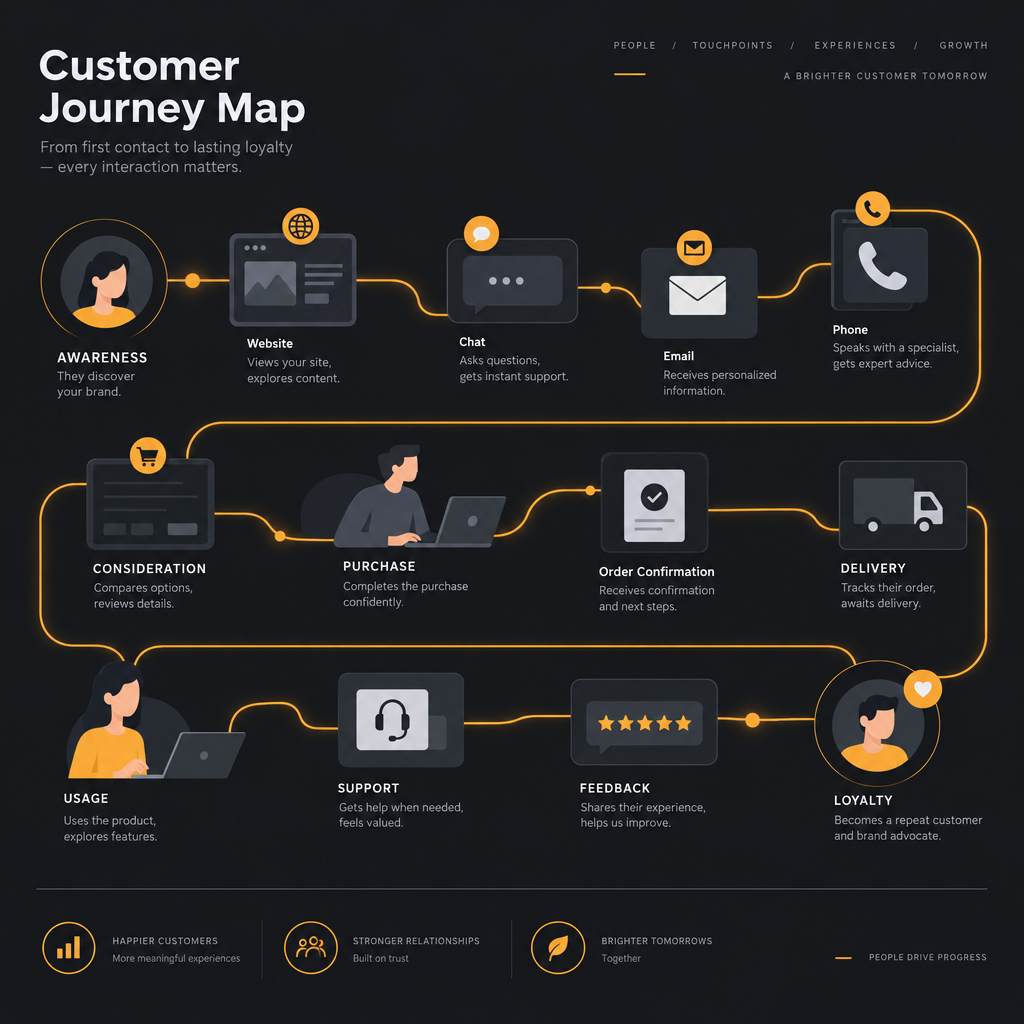
Understanding every touchpoint your customers have with your brand is essential. Create a detailed customer journey map that captures all channels, points of interaction, and potential pain points.
Use this journey map to identify moments of truth — interactions that heavily influence customer perceptions. For instance, first contact with support or the onboarding experience often defines long-term satisfaction.
A comprehensive journey map also reveals opportunities for smoother transitions and consistent experiences across channels, something achievable through tools like an Omnichannel Inbox.
3. Gather and Analyze Customer Feedback Continuously
Customer feedback is the lifeblood of any CX strategy. Implement multiple feedback channels like surveys, social listening, and direct customer interviews.
Combine these qualitative insights with quantitative data such as Net Promoter Scores (NPS) and Customer Satisfaction Scores (CSAT). Leveraging AI & Analytics helps identify patterns and prioritize areas for improvement efficiently.
4. Empower Your Support Teams with the Right Tools
Your customer-facing teams are the frontline executors of your CX strategy. Equip them with resources such as a centralized Knowledge Base to provide quick, consistent answers.
Implementing QA & Coaching capabilities ensures ongoing training and quality control, boosting team performance and customer satisfaction.
5. Automate Routine Tasks to Enhance Efficiency
Automation can free up your support teams to focus on complex cases requiring human empathy. Use Automations & Workflows to handle common queries, ticket routing, and follow-ups.
This approach reduces response times and error rates, directly impacting key performance indicators.
6. Personalize Customer Interactions
Personalization elevates customer experience by making clients feel valued. Integrate customer data from CRM systems and use AI-driven insights to tailor conversations and offers.
Tools supporting Multilingual Support also enhance accessibility and inclusivity for diverse customer bases.
7. Measure, Report, and Iterate
CX strategy adoption is an ongoing process. Establish dashboards with relevant KPIs and use Report Builder tools to track progress.
Regularly review performance data to identify successes and areas needing adjustment. Agile iteration ensures your CX strategy evolves with customer expectations and market changes.
8. Foster a Customer-Centric Culture Across the Organization
Finally, embedding CX into the company culture is vital for long-term success. Encourage cross-department collaboration and make customer insights accessible to marketing, product development, and sales teams.
Leaders must actively champion CX initiatives to align teams around shared goals and customer-centric values.
---
Adopting a customer experience strategy doesn’t have to be overwhelming. By following this step-by-step framework, you can systematically build a CX program that drives measurable business outcomes and lasting customer loyalty.
If you want to explore how technology can support each stage of your CX journey, check out AItocha's full range of features or schedule a Live Demo to see the platform in action.
---
Key Takeaways
- Align CX objectives with business goals for focused impact.
- Map customer journeys to uncover critical touchpoints.
- Use continuous feedback and AI analytics to guide improvements.
- Empower teams with knowledge bases, coaching, and automation.
- Personalize interactions and embrace multilingual support.
- Measure and iterate using data-driven insights.
- Cultivate a customer-centric culture organization-wide.
This framework provides a solid foundation to transition from good intentions to great customer experiences that differentiate your brand in competitive markets.