AI & Automation
The ROI of Chatbots and Automation: What the Numbers Actually Show
The ROI of Chatbots and Automation: What the Numbers Actually Show
Many companies invest in chatbots and automation hoping to reduce costs and improve customer experience. But what does the data really say about the return on that investment? This post dives into concrete numbers and KPIs to help support leaders make informed decisions about integrating these technologies into their operations.
Why Measure ROI for Chatbots and Automation?
Customer service budgets are tight, and leadership demands measurable results. Chatbots and automation tools can seem costly upfront, but their true value lies in how they impact efficiency, customer satisfaction, and revenue retention over time. Tracking the right metrics is critical to understanding their real impact.
Key Metrics That Define ROI
- Cost Savings from Reduced Agent Load
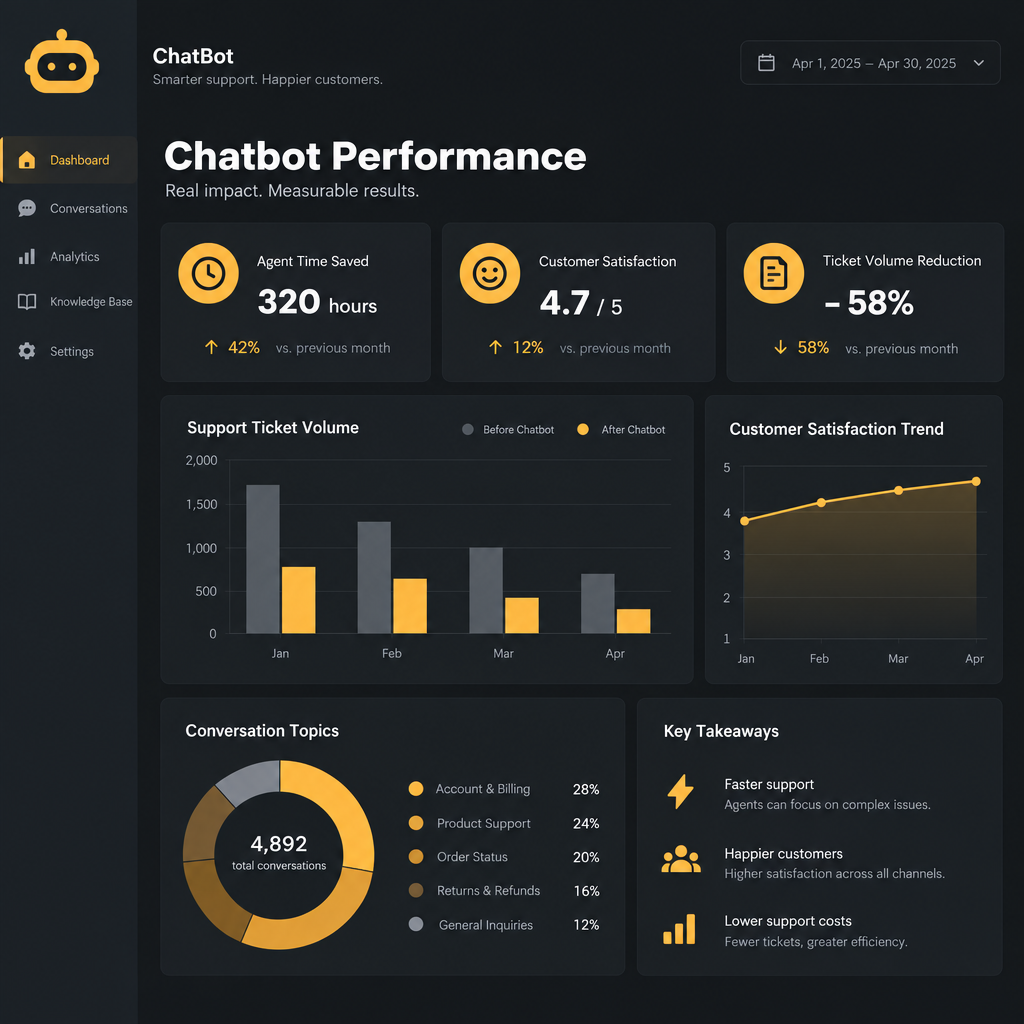
- This translates to an average agent time savings of 20-35%, depending on the complexity of the product or service.
- Example: A mid-sized SaaS company reported a 25% reduction in full-time equivalent (FTE) agents after deploying automated workflows and chatbots, saving approximately $500,000 annually.
- Improved First Contact Resolution (FCR) Rates
- Higher FCR correlates with lower repeat contacts, directly reducing operational costs.
- Increased Customer Satisfaction (CSAT) and Net Promoter Score (NPS)
- Automation also facilitates 24/7 support availability, an important factor for global customers.
- Revenue Impact Through Lead Capture and Retention
- Retailers using chatbots have seen conversion rates increase by 5-10%, generating measurable revenue gains.
Real-World Case Study: SaaS Support Automation
A SaaS company integrated AI-powered chatbots and automated ticket routing using an Omnichannel Inbox combined with Automations & Workflows. After six months:
- Ticket volume reduced by 18% due to automated self-service options.
- Average response time dropped from 7 minutes to under 2 minutes.
- Customer satisfaction increased by 8%.
- Support cost per ticket decreased by 22%, yielding a substantial ROI within the first year.
Avoiding Common Pitfalls That Can Skew ROI
- Over-automation: Automating too many complex issues can frustrate customers and increase escalations.
- Poor Knowledge Base Integration: Chatbots must be backed by a well-maintained Knowledge Base to provide accurate answers.
- Ignoring Multichannel Needs: Customers expect consistent experiences across channels; limiting automation to chat only can reduce effectiveness.
How to Track and Maximize ROI
- Use an AI & Analytics dashboard to monitor chatbot engagement rates, deflection percentages, and customer satisfaction trends.
- Set clear SLA targets and monitor compliance via tools like SLA Compliance.
- Continuously optimize automated workflows and chatbot scripts based on data and customer feedback.
Conclusion: The Numbers Make a Strong Case
While initial investments in chatbots and automation can be significant, data from diverse industries consistently show meaningful ROI through cost savings, improved customer satisfaction, and increased revenue opportunities. The key is to implement with a strategic focus on metrics, customer needs, and continuous optimization.
Companies looking to explore these benefits can start by reviewing comprehensive AI & Analytics capabilities and integrating automation gradually to measure impact effectively.
For more insights, check out our post on How Chatbots and Automation Are Transforming Customer Support in 2026.
---
Key Takeaways:
- Chatbots can reduce agent workload by up to 40%, significantly cutting support costs.
- Improved first contact resolution and faster response times drive higher customer satisfaction.
- Automation contributes to revenue by boosting lead capture and conversion.
- Measuring ROI requires tracking specific KPIs and ongoing optimization.
- Integration with knowledge bases and omnichannel support is essential for success.
By grounding chatbot and automation strategies in real data and measured results, support teams can confidently justify investments and continuously enhance customer experiences.