Best Practices
Measuring Success with Chatbots and Automation: KPIs That Matter
Introduction
Did you know that 67% of consumers have used a chatbot for customer support? As their prevalence grows, so does the need for organizations to measure their effectiveness. But how do you quantify success? In this post, we'll explore the key performance indicators (KPIs) that matter when it comes to evaluating chatbots and automation in customer service.
Understanding the Importance of KPIs
Key performance indicators serve as a roadmap for your chatbot strategy. They help you assess performance, identify areas for improvement, and justify investments in automation. When set correctly, good KPIs provide actionable insights that can enhance customer experience and optimize operational efficiency.
Key KPIs for Chatbots and Automation
Here are some of the most critical KPIs to track to ensure your chatbot or automation solutions are delivering value:
1. Response Time
The speed at which your chatbot responds to customer inquiries is a fundamental metric. A faster response time often leads to higher customer satisfaction. For example, if your chatbot has a typical response time of under five seconds, you’re likely to see better engagement rates compared to those with slower responses. Set a benchmark and strive to maintain or improve it.
2. Resolution Rate
This KPI measures the percentage of inquiries that a chatbot resolves without needing human intervention. A high resolution rate indicates that the bot is effectively addressing customer queries. For instance, if your chatbot resolves 80% of inquiries, that’s a strong indicator of its capability. You can improve this metric by regularly updating your Knowledge Base with relevant information.
3. Customer Satisfaction Score (CSAT)
Measuring customer satisfaction can be done through follow-up surveys after interactions with your chatbot. A CSAT score is typically measured on a scale of 1 to 5 or 1 to 10. If your average CSAT score is 4.5, you can infer that customers are generally pleased with their interactions. This feedback is essential for refining your chatbot's scripts and improving its QA & Coaching processes.
4. Engagement Rate
Engagement rate tracks how often users interact with the chatbot after it’s introduced. This could be measured by the number of conversations initiated versus the number of visitors to your site. If you notice that 30% of your website visitors interact with your chatbot, it shows that your bot is engaging users effectively. Consider using this data to refine your Automations & Workflows and guide users toward common queries.
5. Fallback Rate
The fallback rate indicates how often users resort to human agents after interacting with the chatbot. If the fallback rate is high, it could suggest that the chatbot is not equipped to handle specific queries. For example, if 20% of users need to escalate their queries to human agents, investigate the types of inquiries that are causing trouble. This analysis can guide updates to improve the bot's performance.
6. Operational Cost Savings
One of the main reasons for implementing chatbots is to cut costs while enhancing efficiency. Tracking the reduction in operational costs as a result of automation can show how much budget you’re saving. For instance, if chatbot implementation leads to a 30% reduction in support staff hours, that’s a clear indicator of success.
7. Net Promoter Score (NPS)
NPS measures customer loyalty and how likely they are to recommend your service to others. After a chatbot interaction, you can ask customers how likely they are to recommend your company on a scale from 0 to 10. A higher NPS indicates satisfied customers; for instance, if your NPS is above 50, you’re likely doing well in customer service.
Putting KPIs into Action
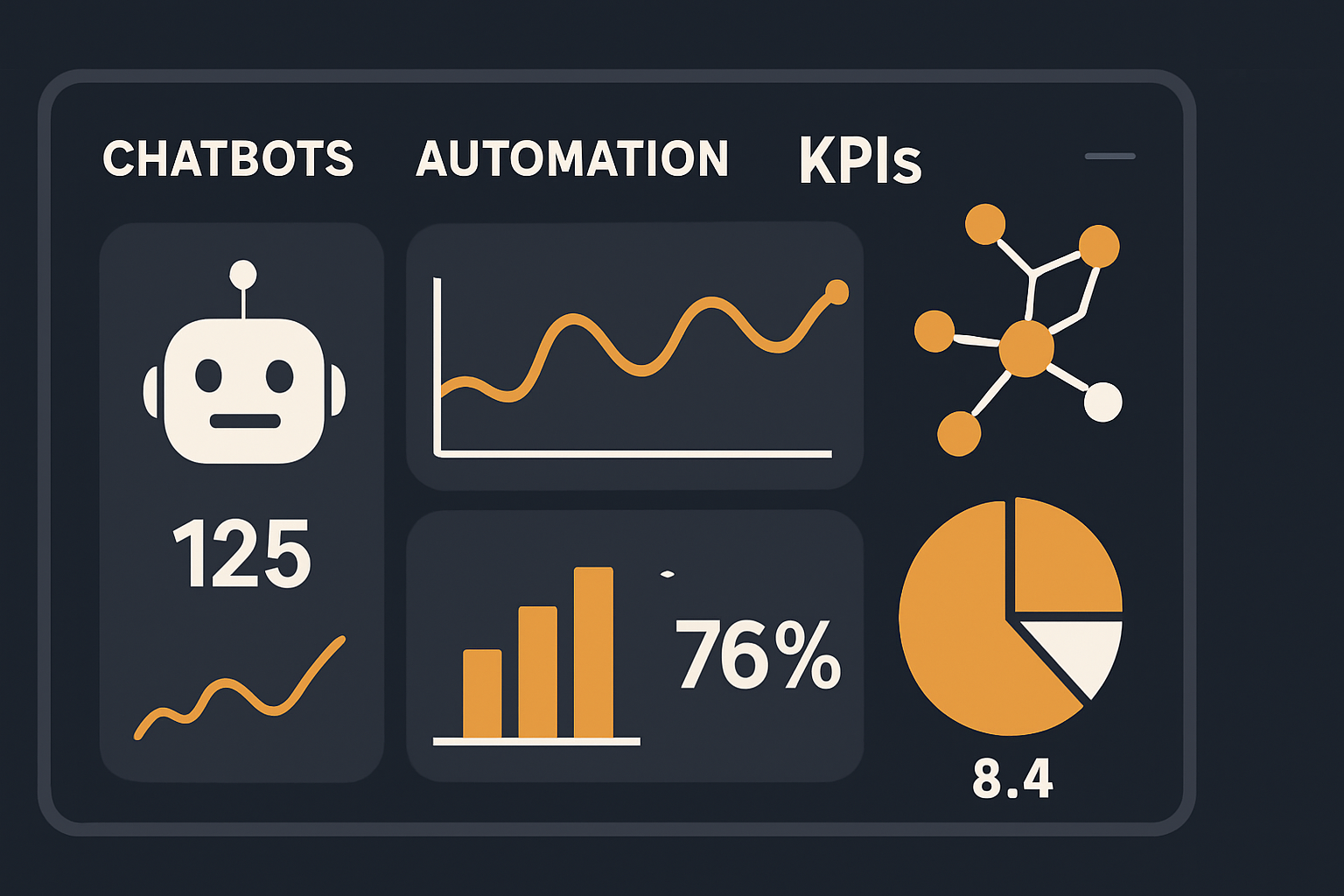
Once you’ve established which KPIs to track, it’s crucial to analyze this data regularly. Use tools and dashboards that provide real-time data so that you can make informed decisions swiftly. AItocha’s AI Insights Dashboard can help you easily track and visualize these KPIs in one place.
It’s also essential to create a feedback loop. Regularly review the KPIs and adjust your strategies based on findings. If, for example, your resolution rate drops, consider revisiting your Knowledge Base or training your chatbot to handle more complex queries.
Conclusion
Measuring the success of chatbots and automation involves understanding which KPIs matter most for your customer support strategy. By focusing on metrics like response time, resolution rate, and customer satisfaction, you can gain valuable insights that help enhance both user experience and operational efficiency. Implement these KPIs effectively, and you'll be well on your way to optimizing your chatbot solutions.
Key Takeaways
- Response Time and Resolution Rate are fundamental to customer satisfaction.
- Utilize CSAT and NPS to gauge feedback directly from customers.
- Regularly analyze KPIs and adjust your strategies accordingly for continuous improvement.
- Tools like AItocha's AI Insights Dashboard can facilitate effective tracking of these metrics.
By focusing on these key performance indicators, you can ensure that your automation and chatbot initiatives are not just trends but valuable assets in your customer support strategy.