Best Practices
How Omnichannel Support Is Changing Customer Support in 2026
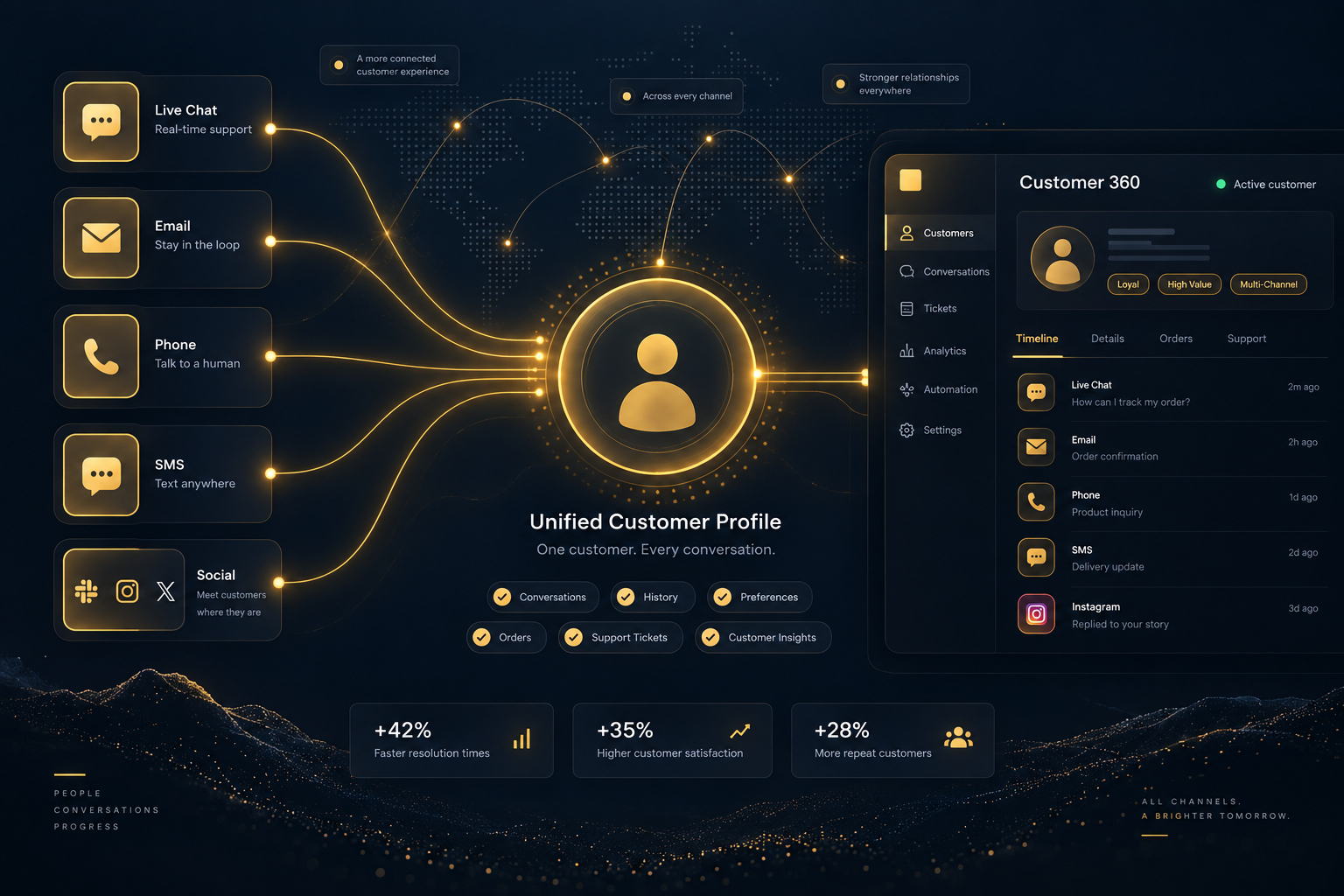
Customers no longer care which channel you use
A customer might start with a website chat, follow up by email, then call when the issue becomes urgent. If your team treats those as three separate interactions, the customer has to repeat everything three times—and that’s usually when satisfaction drops.
That’s why omnichannel support has become one of the most practical shifts in customer service in 2026. It’s not about being present on every channel for the sake of it. It’s about making every channel feel connected so the customer can move between them without losing context.
For support teams, this matters because the cost of disconnected service is measurable: longer handle times, more repeat contacts, slower escalations, and more frustrated customers. For a more detailed look at the operating model behind this shift, see The Complete Guide to Omnichannel Support for SaaS Companies.
What omnichannel support actually means in 2026
A lot of teams still confuse omnichannel with multichannel. Multichannel means you offer several ways to contact support. Omnichannel means those channels share data, history, and workflow.
In practice, that means:
- An email agent can see the chat transcript from yesterday
- A phone agent can pick up the full case history before answering
- A customer can switch from self-service to live support without starting over
- Managers can track performance across channels in one place
This is where platforms like Omnichannel Inbox and AI & Analytics become useful. They help teams centralize conversations and identify patterns across channels instead of managing each queue in isolation.
Why omnichannel support is gaining ground now
There are three reasons omnichannel support is more important in 2026 than it was even a few years ago.
1. Customers expect continuity
People now move fluidly between mobile, desktop, SMS, voice, and messaging apps. They don’t see these as separate service lanes—they see one brand.
If a customer begins on WhatsApp at 9:10 a.m. and calls at 9:30 a.m., they expect the agent to know what happened. If the agent asks them to re-explain the issue, the experience feels broken.
2. Support teams are under pressure to do more with less
Many support teams are being asked to handle growing ticket volumes without increasing headcount at the same pace. Omnichannel systems reduce duplication by giving agents the context they need on the first interaction.
That can mean fewer transfers, less back-and-forth, and fewer escalations for simple issues. When paired with Automations & Workflows, repetitive routing and follow-up tasks can be handled automatically.
3. AI works better when channels are connected
AI support tools are only as good as the context they can access. If your chat bot knows one version of the customer story and your email system knows another, the AI can’t help much.
When channels are unified, AI can summarize prior conversations, recommend responses, route cases more intelligently, and surface likely next steps. That’s also why many teams are pairing omnichannel support with AI Insights Dashboard to monitor trends across the full customer journey.
What changes for support teams when omnichannel is done well
The biggest benefit is not just convenience. It changes the way support work is handled day to day.
Faster first response times
When the agent already has the customer’s history, the first reply is more accurate. Instead of asking for clarification, the agent can move directly to diagnosis or resolution.
Better escalation management
A case that starts in chat and moves to voice doesn’t need to be rebuilt from scratch. The receiving agent sees the full thread, attachments, and prior notes.
More consistent service quality
With shared context and shared macros, teams are less likely to give conflicting answers across channels. That consistency matters for trust.
Improved coaching and QA
When all interactions are stored in one system, QA teams can review customer journeys instead of isolated tickets. That makes it easier to spot where friction starts and where agents need support. Tools like QA & Coaching help managers turn those patterns into training.
A practical omnichannel workflow example
Imagine a customer buys software, can’t log in, and opens a chat from the help center.
- The chatbot asks a few qualifying questions.
- The issue is routed to a live agent with the transcript attached.
- The agent sees the customer’s plan, recent login attempts, and previous billing history.
- The issue turns out to be a password reset problem, so the agent resolves it in under five minutes.
- The customer receives a follow-up email with the resolution summary and a link to the relevant help article.
Without omnichannel support, that same issue might involve three separate conversations, repeated identity checks, and a longer resolution cycle.
This is also where a strong Knowledge Base helps. If self-service content is connected to live support, customers can solve simpler issues on their own and agents can use the same knowledge source when a human touch is needed.
The metrics that matter in 2026
If you’re evaluating omnichannel support, don’t stop at vanity metrics like “number of channels supported.” Focus on outcomes.
Track:
- First response time by channel
- Average handle time across channel switches
- Repeat contact rate
- Transfer rate between teams
- Resolution time for cross-channel cases
- CSAT by journey, not just by ticket
If these numbers improve after implementation, your omnichannel model is working. If they don’t, the channels may be connected on paper but not operationally.
A strong measurement framework is essential, and Measuring Success with Omnichannel Support: KPIs That Matter goes deeper into which metrics should actually guide your team.
Common mistakes teams still make
Even in 2026, many support teams say they have omnichannel support when they really have a collection of disconnected tools.
The most common mistakes are:
- Separate inboxes with no shared customer history
- Different policies by channel, which creates inconsistent answers
- No routing logic, so urgent cases sit in the wrong queue
- Weak reporting, so leaders can’t see the full customer journey
- Too much automation without a human handoff path
The fix is usually less about adding more tools and more about connecting the ones you already use. Integrations with CRM, billing, and product systems matter because support needs access to the same context the rest of the business already has.
Where AI fits into omnichannel support
AI is not replacing omnichannel support; it’s making it more useful.
In a connected support environment, AI can:
- Summarize multi-step conversations
- Suggest next-best actions based on prior interactions
- Auto-route tickets based on urgency or intent
- Draft replies using the customer’s history
- Flag churn risk or repeat issue patterns
That means agents spend less time searching and more time solving. And when AI is paired with smart routing and channel history, it becomes much easier to provide support that feels personal rather than mechanical.
Final takeaways
Omnichannel support in 2026 is less about being everywhere and more about being connected everywhere.
The teams that do it well see faster resolutions, fewer repeat contacts, and better customer experiences because every interaction builds on the last one. If you’re still managing support as separate channel silos, the biggest opportunity is not adding more channels—it’s connecting the ones you already have.